Art Journaling
Art journaling is an integrative expressive practice that combines visual imagery with written reflection, offering a structured yet flexible space for emotional processing. Unlike traditional journaling, which relies primarily on language, art journaling allows individuals to externalize internal experiences through color, form, texture, and symbol, alongside words. This multimodal approach can be particularly valuable when emotions feel difficult to articulate, overwhelming, or pre-verbal in nature.
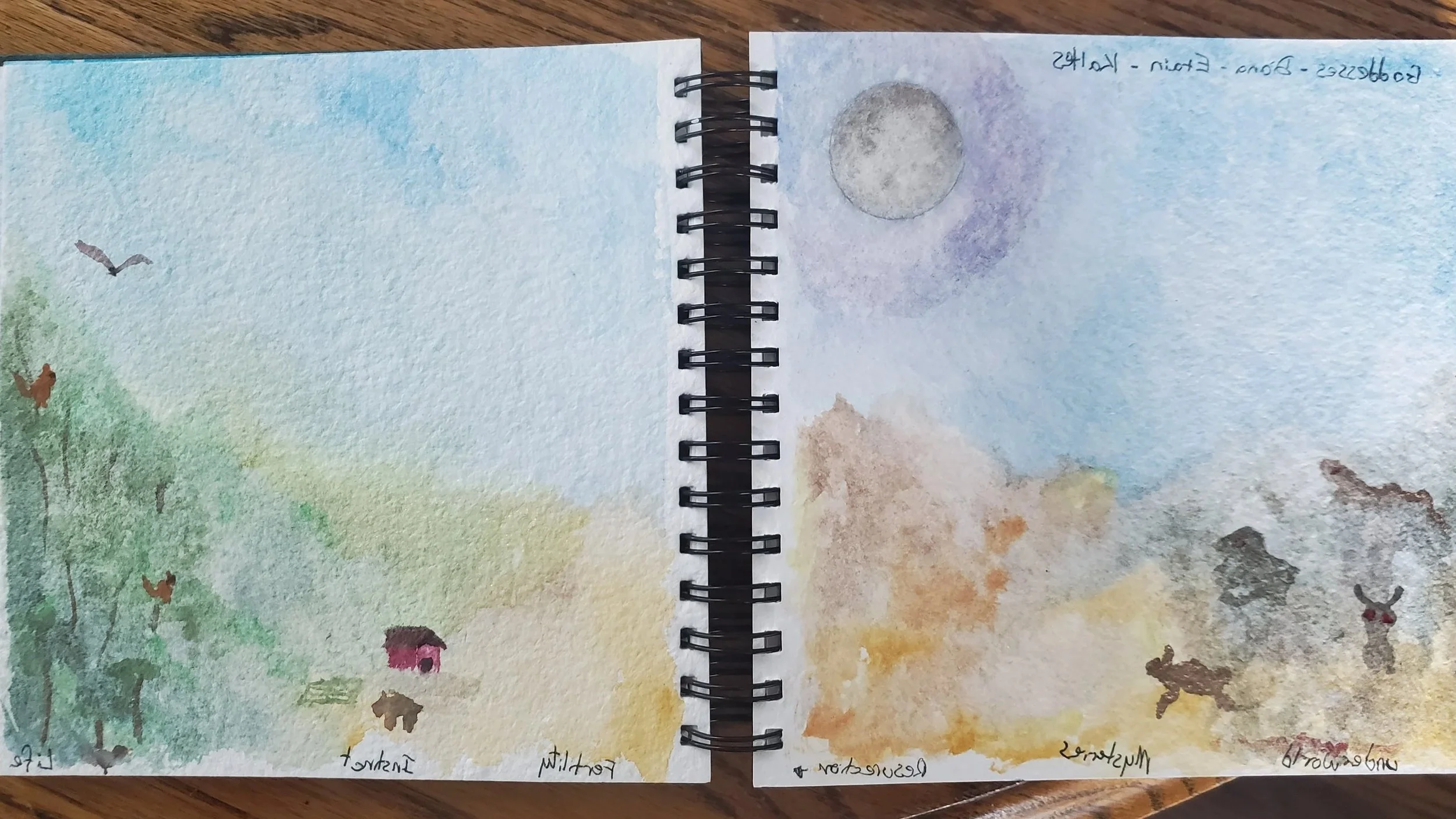
At its core, art journaling functions as a self-guided expressive arts process. Individuals typically work within a dedicated journal, using materials such as watercolor, colored pencils, collage, ink, or mixed media, and may accompany these images with brief written reflections, phrases, or narrative fragments. The integration of visual and verbal expression aligns with foundational principles in Art Therapy, where symbolic representation is understood to facilitate emotional awareness, regulation, and meaning-making (Malchiodi, 2012; Hinz, 2009).
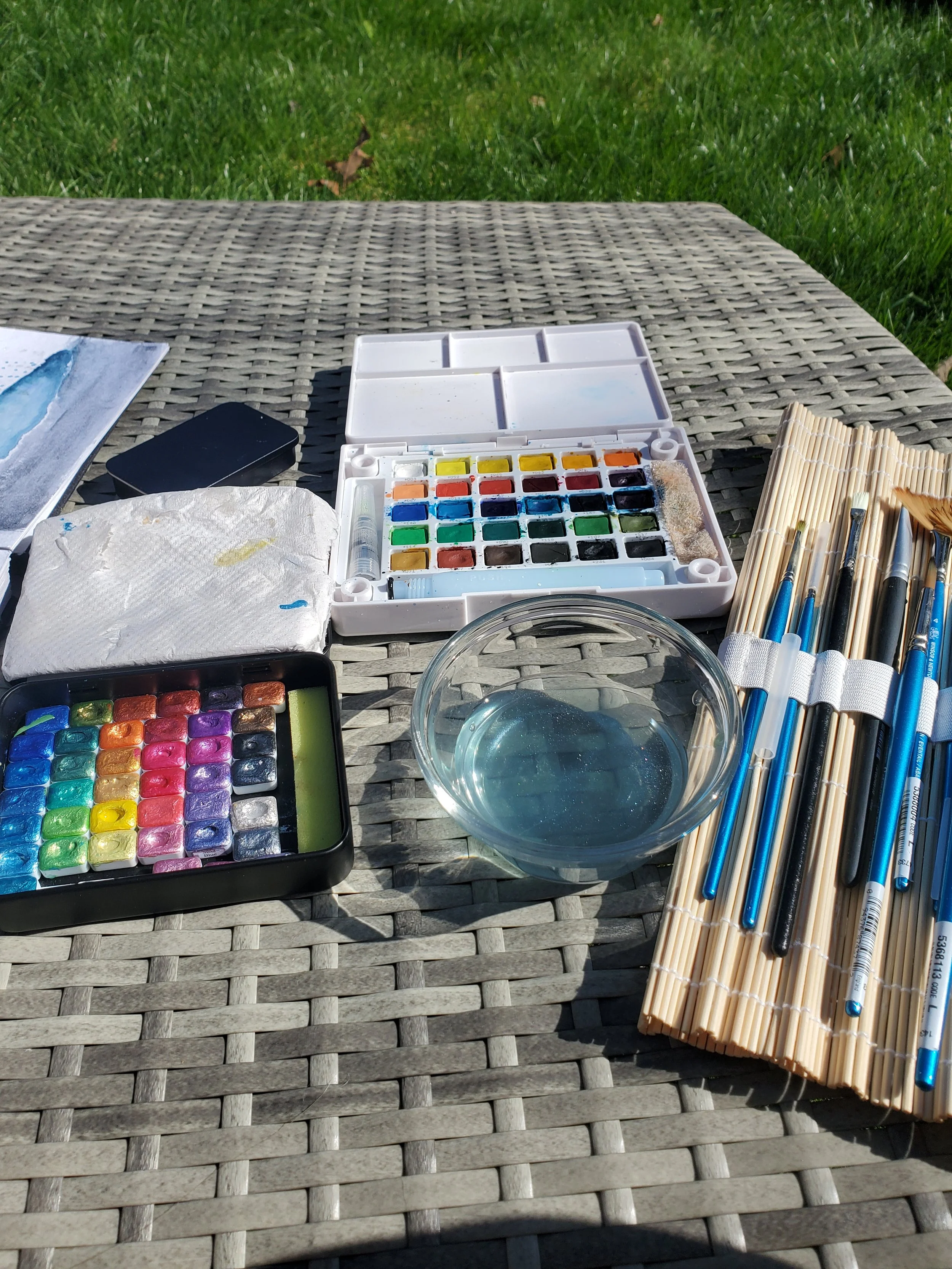
Art journaling is not limited to a specific setting or designated time; its therapeutic value often emerges from its accessibility in everyday life. One of the most meaningful aspects of the practice is the ability to carry a journal and a small art kit, allowing for moments of reflection and expression wherever you are. Whether sitting in a quiet corner of a café, waiting in a car, or pausing between daily responsibilities, the journal becomes an immediate container for thoughts and emotions as they arise.
This portability supports what is often described as in-the-moment processing. Rather than postponing emotional reflection, individuals are able to externalize their internal experiences in real time, capturing the immediacy of feeling before it becomes filtered or suppressed. Brief pauses to draw, add color, or write a few words can create space for contemplation, allowing emotions to be acknowledged without escalation.
From a psychological perspective, this practice aligns with principles of mindfulness and emotional awareness. Engaging with one’s journal throughout the day encourages a stance of observation rather than avoidance, fostering what Steven C. Hayes conceptualizes as psychological flexibility, the capacity to remain present with internal experiences while continuing to engage in meaningful action (Hayes et al., 2006).
Importantly, these moments do not need to be lengthy or elaborate to be effective. Even a few intentional minutes of mark making or writing can interrupt cycles of rumination, ground attention, and facilitate emotional regulation. Over time, this consistent, portable practice reinforces the idea that emotional processing is not confined to therapy sessions or structured routines, but can occur organically within the flow of daily life.
In this way, carrying an art journal becomes more than a creative habit; it becomes an ongoing, responsive dialogue with oneself, offering continuous opportunities for insight, regulation, and self-connection.
Why Art Journaling Supports Emotional Processing
One of the primary benefits of art journaling is its ability to bypass purely cognitive processing and access deeper emotional material. Research suggests that expressive modalities, including visual art-making, engage sensory and affective systems in ways that differ from verbal processing alone (Kaimal et al., 2016). This can be especially important for individuals experiencing anxiety, trauma, or emotional dysregulation, where thoughts and feelings may not yet be fully organized into language.
From a neuropsychological perspective, engaging in creative expression can support integration between right-hemisphere processes (associated with emotion, imagery, and sensory experience) and left-hemisphere processes (associated with language and cognition) (Malchiodi, 2012). When individuals pair imagery with written reflection in an art journal, they are effectively bridging these systems, fostering greater coherence and self-understanding.
Additionally, expressive writing research has consistently demonstrated that structured emotional expression can lead to improvements in both psychological and physical health. The seminal work of James W. Pennebaker found that individuals who engage in written emotional disclosure show reductions in stress and improvements in well-being over time (Pennebaker & Chung, 2011). Art journaling extends this principle by incorporating nonverbal expression, which may deepen and broaden the processing experience.
Art Journaling and Emotion Regulation
Art journaling also supports emotion regulation by providing a contained space for exploration. The physical boundaries of the journal can serve as a psychological container, allowing individuals to “hold” difficult emotions without becoming overwhelmed. This aligns with theories of containment in psychotherapy, where externalizing internal states into a manageable form promotes regulation and reflection.
Within the framework of the Expressive Therapies Continuum (Hinz, 2009), art journaling can engage multiple levels of processing:
Kinesthetic/Sensory: the physical act of mark-making, movement, and material engagement
Perceptual/Affective: the use of color, shape, and composition to express emotion
Cognitive/Symbolic: the integration of meaning through symbols and written language
This layered engagement allows individuals to move fluidly between experiencing and reflecting, which is central to effective emotional processing.
The Role of Symbolism and Personal Narrative
A distinguishing feature of art journaling is its reliance on symbolic representation. Symbols allow individuals to express complex emotional states indirectly, which can feel safer and less exposing than literal disclosure. Over time, recurring imagery within a journal may reveal patterns, themes, and shifts in self-perception.
This process aligns with narrative approaches in psychotherapy, where individuals construct and reconstruct meaning from their lived experiences. By visually mapping emotions and life events, art journaling can support the development of narrative coherence, a factor associated with psychological well-being (Adler et al., 2016).
Importantly, art journaling does not require artistic skill. The emphasis is not on aesthetic outcome, but on authentic expression. The journal becomes a private space where individuals can explore their internal world without judgment or performance pressure.
Clinical and Everyday Applications
Art journaling can be used both within therapeutic contexts and as a self-directed practice. Clinically, therapists may incorporate art journaling as an ongoing intervention to support clients between sessions, particularly for those who benefit from nonverbal expression or struggle with direct verbal processing.
In everyday use, individuals may turn to art journaling to:
Process stress, anxiety, or emotional overwhelm
Reflect on life transitions or personal growth
Enhance self-awareness and mindfulness
Develop a consistent self-care practice
The flexibility of the practice allows it to meet individuals where they are, adapting to varying emotional needs and levels of engagement.
Conclusion
Art journaling represents a powerful intersection of creativity and psychological processing. By combining image and word, individuals gain access to a broader expressive range, enabling deeper emotional exploration and integration. As both a therapeutic tool and a personal practice, art journaling supports the fundamental human need to make sense of experience, fostering self-awareness, regulation, and meaning over time.
References
Adler, J. M., Lodi-Smith, J., Philippe, F. L., & Houle, I. (2016). The incremental validity of narrative identity in predicting well-being: A review of the field and recommendations for the future. Personality and Social Psychology Review, 20(2), 142–175. https://doi.org/10.1177/1088868315585068
Hinz, L. D. (2009). Expressive therapies continuum: A framework for using art in therapy. Routledge.
Kaimal, G., Ray, K., & Muniz, J. (2016). Reduction of cortisol levels and participants’ responses following art making. Art Therapy, 33(2), 74–80. https://doi.org/10.1080/07421656.2016.1166832
Malchiodi, C. A. (2012). Handbook of art therapy (2nd ed.). Guilford Press.
Pennebaker, J. W., & Chung, C. K. (2011). Expressive writing: Connections to physical and mental health. In H. S. Friedman (Ed.), Oxford handbook of health psychology (pp. 417–437). Oxford University Press.